
Bivouac gear: the complete checklist for a successful night in the great outdoors
A successful bivouac depends on more than just choosing the right location. Comfort, safety and enjoyment mainly depend on having the right gear: shelter, sleeping equipment, clothing, cooking supplies, water, lighting and essential accessories.
Every item should be useful, compact and suited to the length of your trip.
Your shelter, sleeping mat and sleeping bag are the essentials for a comfortable bivouac.
Cold, wind and damp can turn an enjoyable night into an unpleasant experience.
Water, food, a headlamp and a first-aid kit should always be included.
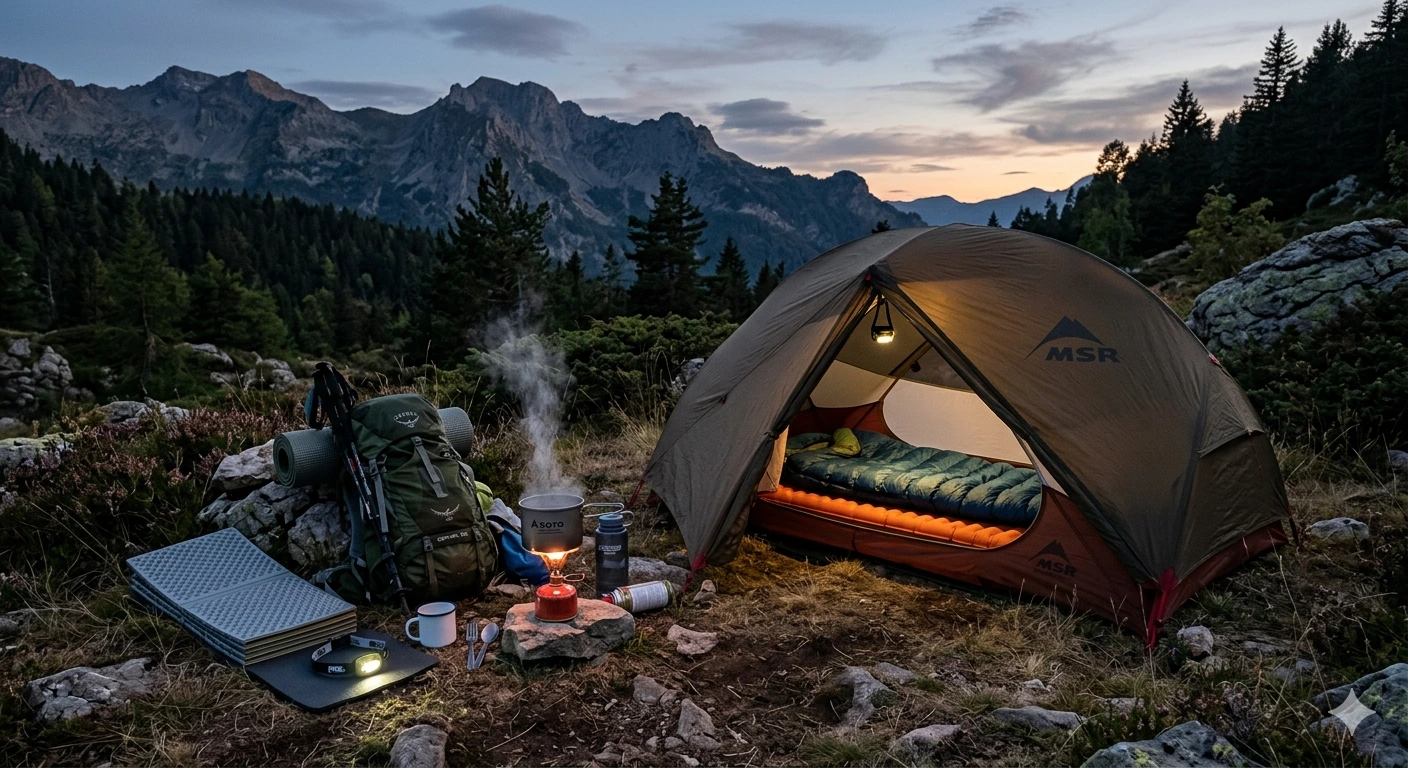
What makes good bivouac gear?
Bivouac gear includes everything you need to spend a night outdoors in good conditions. It should protect you from the cold and damp, help you rest and provide a basic level of self-sufficiency until the following day.
The right gear isn’t necessarily the most technical or the most expensive. It’s the gear that suits your style: lightweight hiking, multi-day trekking, micro-adventures, bikepacking, summer camping or outings in cooler conditions.
The essential gear for setting off with peace of mind
Lightweight tent, tarp, bivy sack or hammock depending on the terrain, weather and your level of experience.
Choose a comfort rating suited to the season and the expected nighttime conditions.
A sleeping pad insulates you from the ground and reduces heat loss during the night.
The capacity depends on the length of your trip, the gear you’re carrying and how you organize it.
Pack a breathable base layer, a warm layer and protection from rain or wind.
Essential for setting up camp, cooking, getting around and packing away your gear at night.
Compact stove, cooking set, water bottle, hydration bladder or filter depending on the duration and level of self-sufficiency you’re looking for.
A first-aid kit, map, GPS, charged phone and emergency blanket should remain easily accessible.
Sleep well: the shelter, sleeping pad and sleeping bag trio
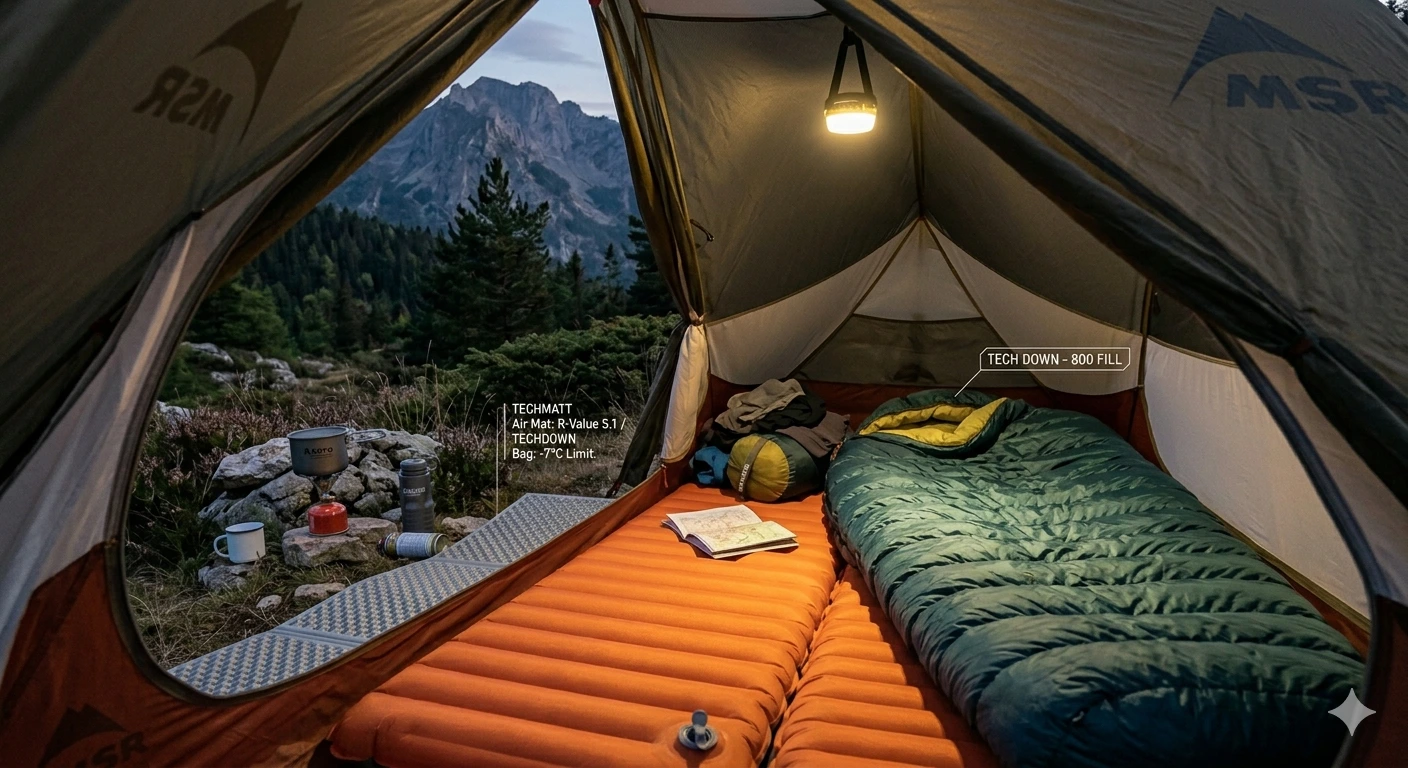
Your sleep system is the heart of your bivouac gear. A high-performance tent is not enough if the sleeping mat does not insulate you properly from the ground or if the sleeping bag is not suited to the actual temperature.
First, consider the expected conditions: altitude, wind, humidity, season and minimum nighttime temperature. If in doubt, allow for an extra safety margin.
Eating hot food and managing your water while bivouacking
Useful for heating water, preparing a freeze-dried meal or cooking simple dishes. Always check compatibility with your canister or fuel.
A lightweight cooking pot, mug and multifunction utensil are often enough for one night. The goal is to minimize bulk.
Water bottle, hydration bladder or soft flask: adjust your capacity according to the weather, the planned effort and the available water sources.
When hiking from place to place, a water filter or purification tablets can help secure your water supply, especially when far from resupply points.
How should you organize your pack for a bivouac?
A good bivouac pack should be balanced. Heavy items go close to your back, while things you need during the day should remain accessible, and nighttime gear can be stored in a dedicated compartment or pocket.
Use pouches or waterproof bags to separate clothing, food, electronics, and sleeping gear. You’ll save time when setting up camp.
Always keep the essentials within easy reach.
Accessories not to overlook
Bandages, dressings, disinfectant, emergency blanket, and personal medication should remain accessible.
Dry bags, a rain cover, and dry clothing help protect sensitive gear.
A map, GPS, outdoor watch, or charged phone with an offline route can help you avoid unpleasant surprises.
Useful for recharging your phone, headlamp, or GPS, especially on longer trips.
Toilet paper, hand sanitizer, a waste bag, and a small lightweight towel should be included.
Take your waste with you, avoid sensitive areas, and settle in discreetly.
Our tips for making your first bivouac a success
Set up your tent, inflate your sleeping mat, check your stove, and test your headlamp before you’re out in the field.
A bag that’s too heavy will quickly tire you out. Choose versatile gear and avoid unnecessary duplicates.
Even in summer, temperatures can drop. Keep a warm layer and dry clothes for sleeping.
Avoid damp areas, hollows exposed to the cold, unstable ground, and heavily trafficked paths.
Frequently asked questions about bivouac gear
For one night, a 35- to 50-liter backpack may be enough, depending on how compact your gear is. For several days, you may need a larger capacity.
No. Depending on the conditions and your experience, a tarp, bivy sack, or hammock may be suitable. However, a tent can be reassuring when you’re just starting out.
Shelter, sleeping mat, and sleeping bag are the priorities. Without proper protection, comfort and safety can quickly deteriorate.
Avoid duplicates, choose compact gear, adjust the amount of water and food, and favor multi-purpose equipment.
Equip yourself with the right gear to make the most of your bivouac.
Shelter, sleeping gear, backpack, outdoor cooking equipment, headlamp or safety accessories: prepare for your next night outdoors with a selection designed for the trail.