
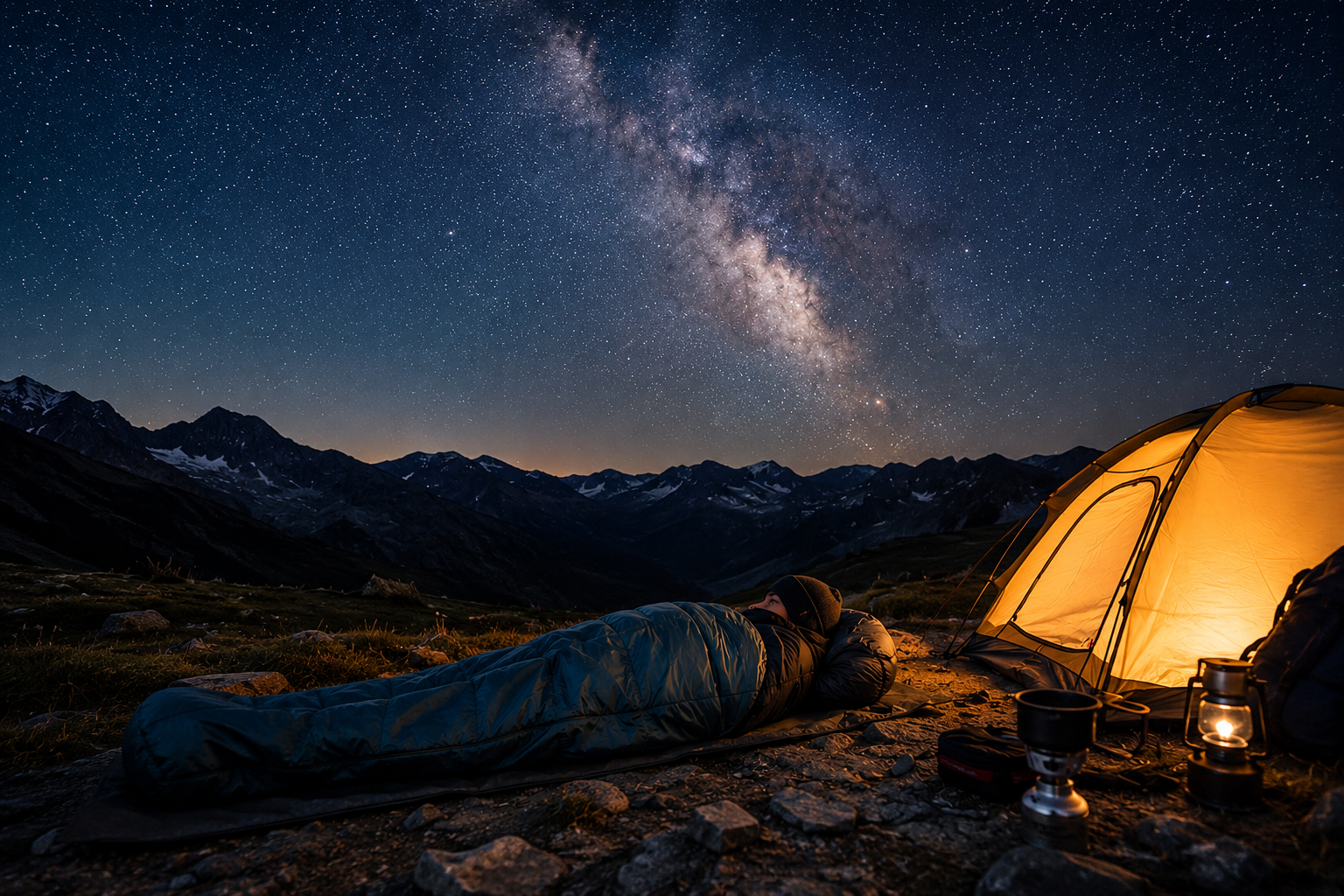
How to choose your bivouac sleeping bag?
A sleeping bag is one of the most important pieces of equipment for a good night outdoors. Comfort temperature, insulation, weight, packed volume and weather conditions: here are the criteria you need to know to choose a sleeping bag suited to your activities.
The first criterion to consider when you want to stay warm without overloading your pack.
Natural or synthetic insulation: each option has its advantages depending on how you use it.
A good sleeping bag should stay warm, compact and easy to carry.
Shape, size, hood and draft collar all have a major impact on sleep quality.
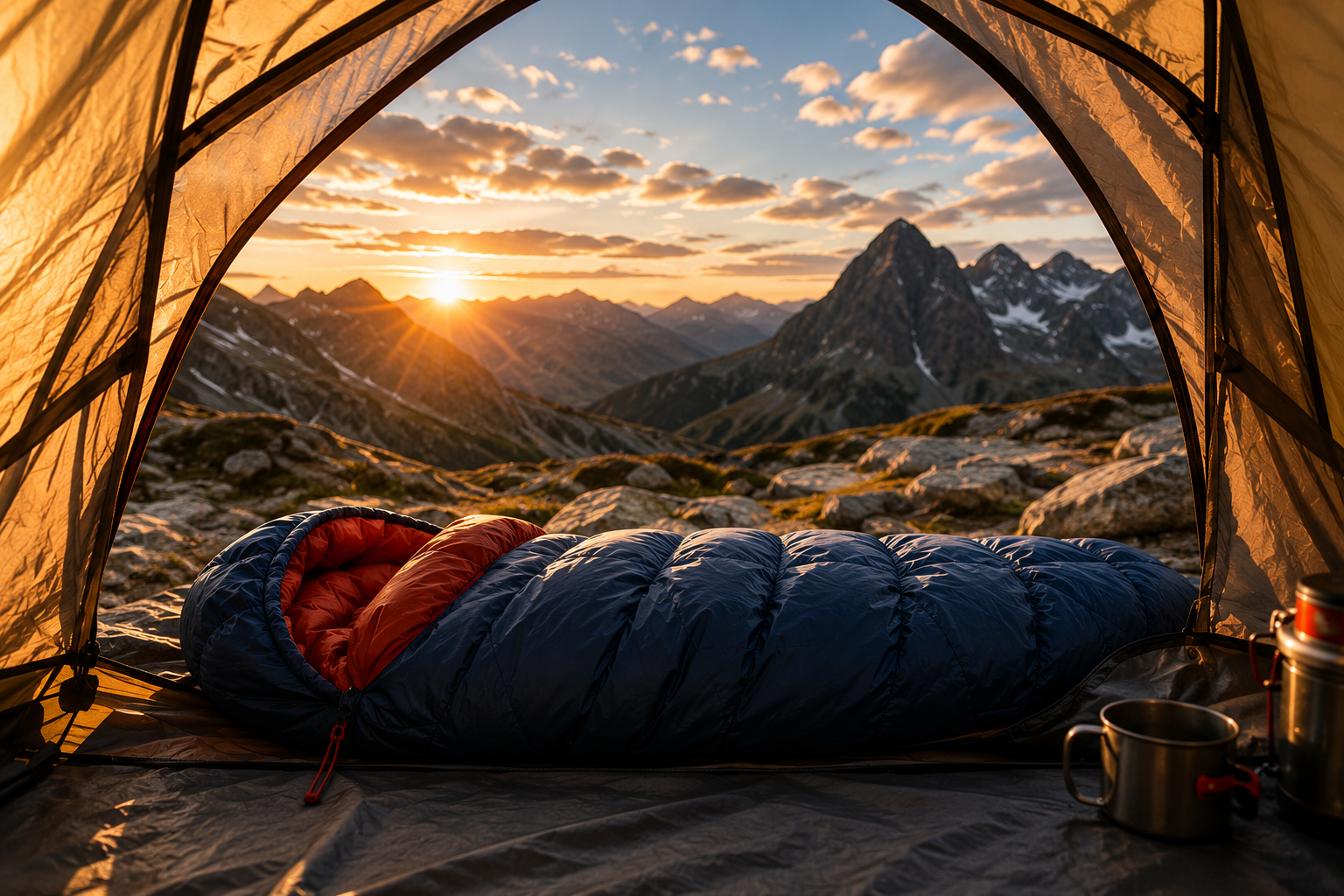
A good sleeping bag should protect you from the cold without weighing down your pack.
The best sleeping bag isn’t necessarily the warmest. It’s the one that offers the right balance between insulation, breathability, weight, volume and comfort for the season, altitude and your sensitivity to the cold.
To make the right choice, you need to consider the comfort temperature, type of insulation, sleeping bag shape, compressibility and your overall sleep system.
The right sleeping bag depends on the season, altitude, and your tolerance for the cold.
A summer night in the lowlands, a three-season trip in the mountains, and a cold-weather bivouac do not require the same level of insulation or the same weight-to-warmth balance.
A lightweight, compact sleeping bag may be enough if temperatures remain mild. The goal is to keep weight down without sacrificing comfort in the early morning.
You need a genuine thermal margin, as nights can be chilly in spring, autumn, or at altitude.
Choosing the right sleeping bag becomes strategic: enhanced insulation, an effective hood, a thermal collar, and a suitable sleeping mat are essential.
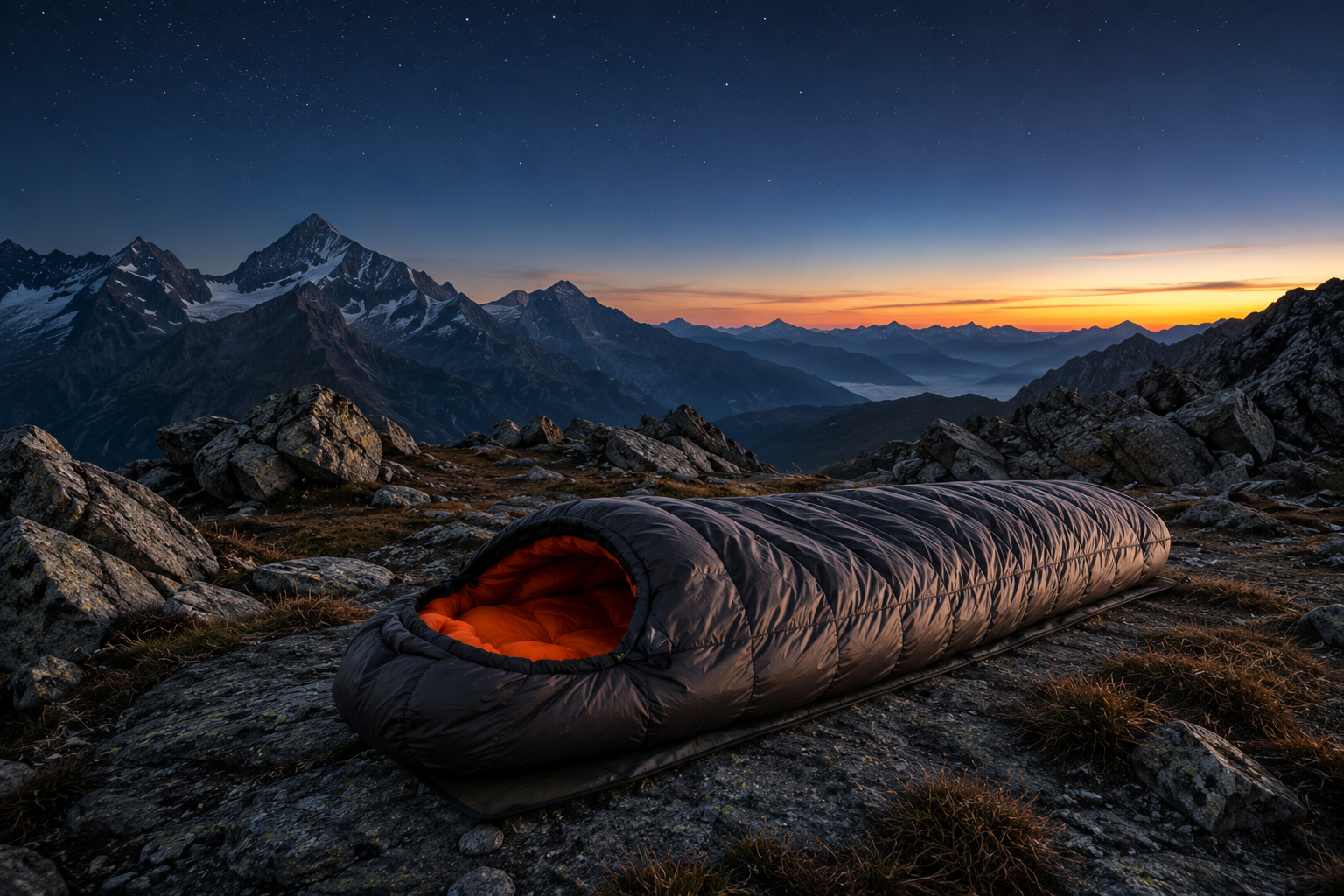
The comfort temperature is the main reference point.
When choosing a sleeping bag, look first at the comfort temperature. It indicates the temperature at which a sleeper can spend the night in acceptable conditions, with suitable equipment.
The limit temperature and extreme temperature are less comfortable reference points to use when buying. For bivouacking, it is better to choose with a safety margin, especially if you are heading into the mountains.
The benchmark to rely on for making your choice with confidence.
A more demanding indication, less comfortable for sleeping.
A safety threshold, not a comfort criterion.
Natural or synthetic down: which should you choose?
The filling directly affects warmth, weight, compressed volume, price, and performance in wet conditions.
Highly valued for its excellent warmth-to-weight ratio and high compressibility. It is well suited to users looking for lightweight, high-performance equipment.
Easier to care for and often more affordable, it retains its properties better in damp conditions. It is a good choice for beginners or bivouacs exposed to moisture.
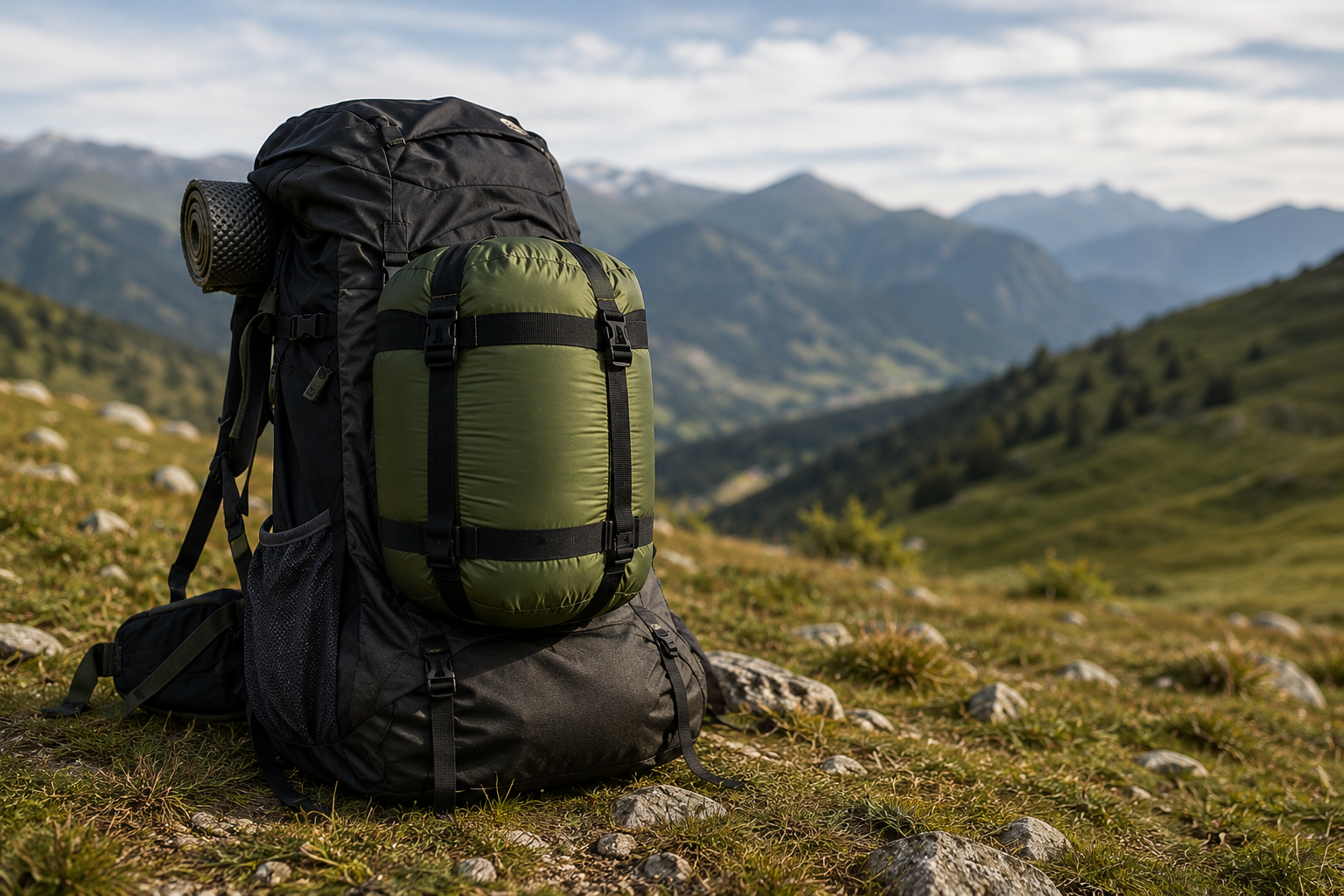
A good sleeping bag should be barely noticeable in your pack.
When bivouacking, every litre counts. A compact sleeping bag frees up space for the rest of your gear: warm clothing, food, water, stove, first-aid kit, and rain gear.
The shape of a sleeping bag also affects its warmth.
Two sleeping bags with a similar temperature rating can offer very different levels of comfort depending on their shape, interior width, hood and ability to limit heat loss.
Closer-fitting, it reduces the volume of air that needs to be warmed and improves thermal efficiency.
A sleeping bag that is too narrow can be uncomfortable, while one that is too wide may be less warm.
Very useful in cool weather, it helps limit heat loss around the head.
It helps retain heat inside the sleeping bag, especially in three-season or cold-weather models.
Which sleeping bag is right for your activity?
The right choice depends on the season, altitude, destination and your personal sensitivity to the cold.
Choose a lightweight, breathable and compact model suited to above-freezing temperatures.
Ideal for spring, summer at altitude and autumn. It is often the best compromise for regular use.
Reserved for more challenging conditions: high altitude, cool weather, long nights or winter bivouacs.
Common pitfalls when choosing a sleeping bag.
It does not correspond to a comfort temperature. To shop with confidence, start with the comfort temperature.
Cold often comes from the ground. A good sleeping bag should be paired with a sufficiently insulated sleeping mat.
A sleeping bag that is too warm can be uncomfortable in summer and heavier to carry. Choose one suited to the majority of your trips.
A bulky sleeping bag can make it harder to organize your pack, especially for lightweight trips.
Frequently asked questions before buying a sleeping bag.
Choose based on the lowest temperature expected at night, while allowing for a safety margin. The comfort temperature remains the best reference.
Synthetic insulation is often more affordable and reassuring in wet conditions. Natural down becomes appealing if you are looking for lightness and compactness.
Avoid storing it compressed for long periods. Let it dry, then store it in a large storage sack to preserve its loft.
No. The sleeping mat, dry clothing, shelter, and bivouac location also play a major role.
Find the right sleeping bag for your next nights camping.
Lightweight, warm, compressible or versatile: choose your sleeping bag according to the season, your activity and your need for comfort.